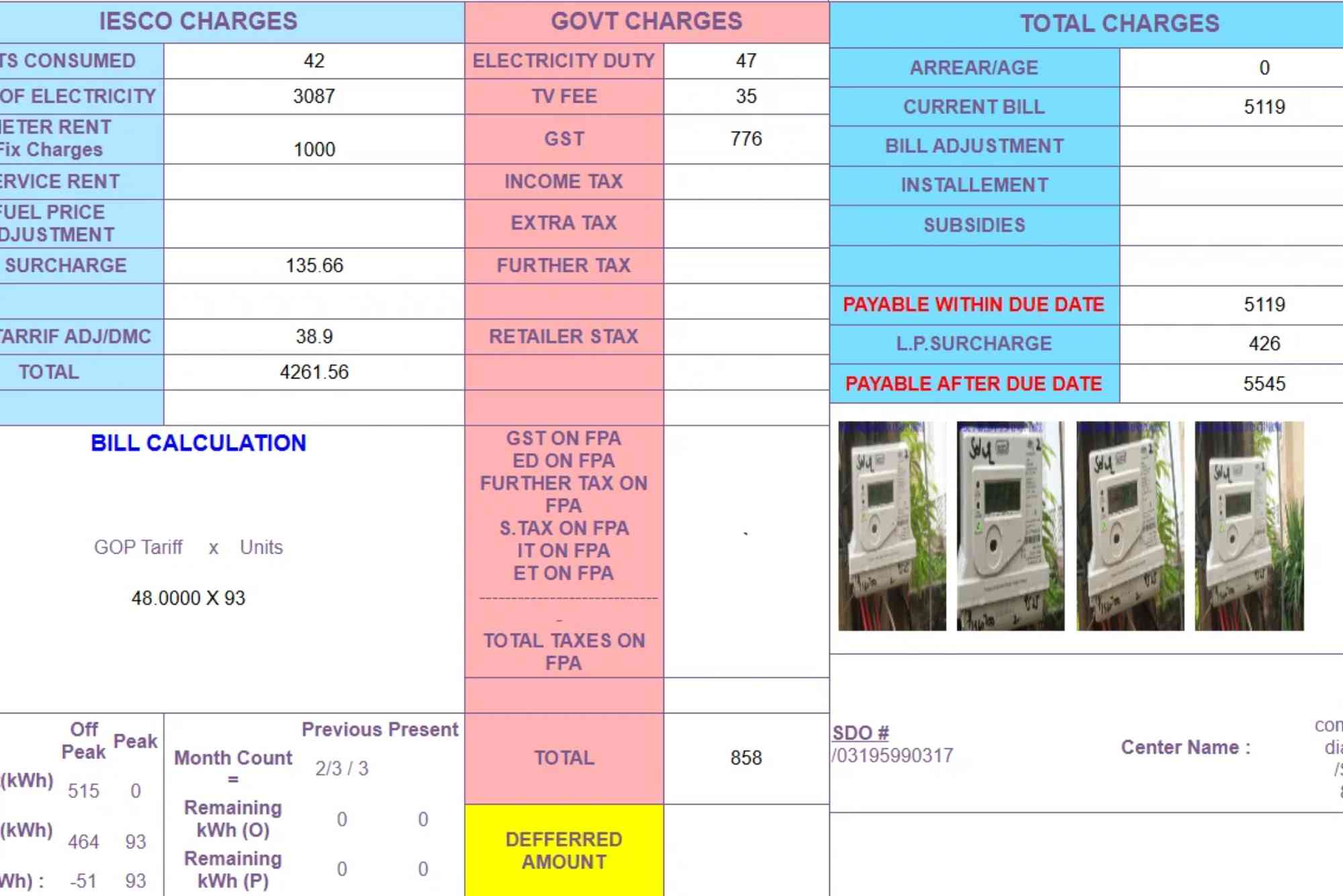
IESCO Electricity Tariff and Unit Rates Explained
Understanding your electricity bill can be confusing — especially when rate slabs, fixed charges, and extra surcharges all play a role. In this article, I explain in simple terms how Islamabad Electric Supply Company (IESCO) calculates electricity bills, what “IESCO unit rates” mean, and how you can use that knowledge to better manage your consumption.
What is IESCO and Why Rates Matter
IESCO is the distribution company responsible for supplying electricity to a broad region.
Every month, your electricity bill depends on the number of units you used — but also on which “slab” your usage falls under and what kind of connection you have (residential, commercial, industrial). That’s why knowing IESCO unit rates is essential if you want to make sense of your bill, or try to reduce it.
When you see “units” on your bill, that means kilowatt‑hours (kWh). Each kWh costs a certain amount set by IESCO depending on your slab. Use fewer units — or keep usage within lower slabs — and your per‑unit price stays lower.
How IESCO Calculates Tariff: Understanding the Slabs
Residential Connections
For most homes, IESCO uses a slab-based or block tariff system. As consumption increases, the per‑unit rate rises.
Here’s roughly how the slab structure works for a standard residential connection:
- For very low usage (e.g., up to about 50 units), there is a subsidized rate.
- As usage increases beyond that, per‑unit costs increase in steps.
- Once usage crosses into higher slabs, the rate applied to all your units may jump — resulting in a much higher bill than anticipated.
This system encourages efficient usage: the less you consume, the lower your cost per unit.

Fixed Charges and Minimum Bills
It’s not just about units. Many connections have a fixed monthly charge — a base fee that you pay regardless of how much electricity you use.
Even if you consume zero units, fixed charges may still apply, for example, Rs. 75 per month for some single-phase connections.
That means that your final bill is the sum of (units consumed × applicable slab rate) plus any fixed monthly charge.
Interpreting Recent IESCO Unit Rates (2024–2025)
Because power costs, fuel prices, and regulatory decisions change, IESCO reviews and updates its tariffs periodically.
As of 2025, many residential users pay roughly the following per‑unit rates:
- The lowest bracket (very low usage) enjoys subsidized rates.
- For typical household consumption, rates escalate through slabs, increasing as units consumed rise.
However, while these base unit rates matter, they don’t include additional costs like fuel price adjustments, taxes, meter rent, or surcharges.
That’s why two households using the same number of units might still receive very different final bills.
What Influences the Final Bill Beyond Unit Rates
Fuel Price Adjustment (FPA) and Surcharges
One key factor is the Fuel Price Adjustment (FPA). This reflects changes in national fuel costs used to generate electricity. When fuel becomes more expensive, FPA increases — and that gets passed on to consumers.
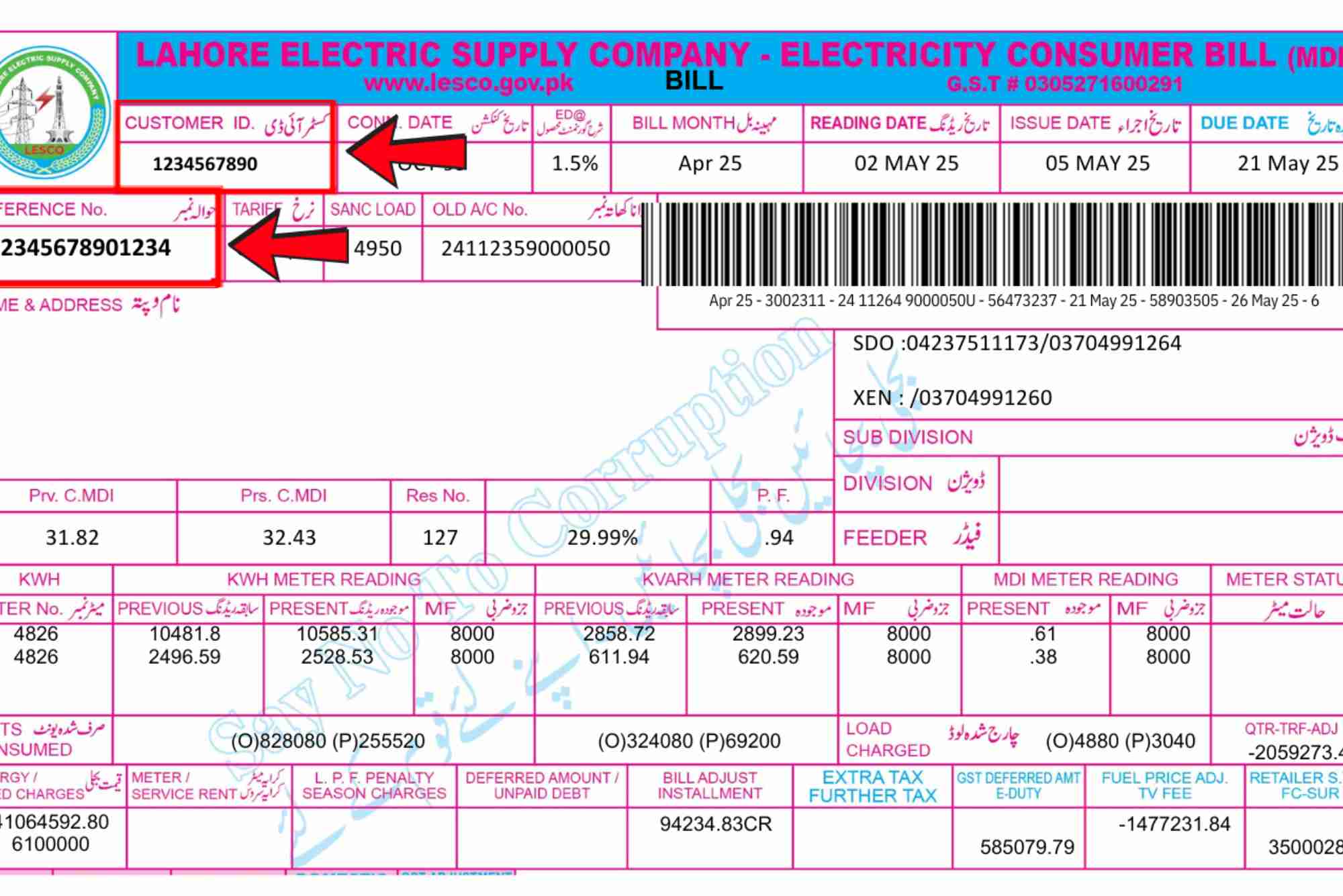
Other possible components include financing cost surcharges, meter rent, taxes, maintenance fees, and sometimes fixed minimum charges.
Time-of-Use and Meter Type
If you have a Time-of-Use (TOU) meter, your rate can vary depending on when you consume electricity. Peak-hour usage may cost more, while off-peak hours are cheaper.
This can be a smart way to reduce your bill: run heavy appliances during off-peak hours to save money.
Connection Type and Sanctioned Load
Your sanctioned load and whether your connection is single-phase or three-phase affects the fixed monthly charges and eligibility for certain slabs or subsidies.
Commercial or industrial users often have a different tariff structure compared to residential consumers. Their bills may include demand charges or flat per-unit rates depending on load and meter type.
How to Estimate Your Bill — Practical Steps
If you want to estimate your monthly electricity bill under IESCO Online Bill Check , follow this simple approach:
First, identify your connection type (residential, commercial, industrial) and sanctioned load. Then check how many units you consumed. Next, determine which slab that number falls into and use the corresponding IESCO unit rate. Multiply units by rate, then add any fixed monthly charge. Lastly, factor in FPA, surcharges, meter rent, or other fees.
For convenience, you can also check your previous bills or use online bill calculators to estimate charges. This helps you plan your consumption better.
Why Regularly Checking IESCO Unit Rates Is Important
Electricity is not a static expense. Costs change due to fuel price fluctuations, regulatory updates, or adjustments by the national authority. As a result, unit rates — and thus your bill — can change without notice.
By staying informed about the current IESCO unit rates and slab structure, you can plan your electricity use better. This helps you avoid unexpected spikes in bills. You can adjust daily usage habits — shifting heavy appliance use to off-peak hours if you have a TOU meter.
Understanding rate slabs encourages mindful consumption. That not only helps your pocket, but can also reduce strain on the grid.
Common Misunderstandings About IESCO Tariff
Many consumers assume that electricity is charged at a flat per-unit rate regardless of usage. That’s false. The slab system means per-unit rate goes up as consumption increases.
Others think that by consuming just a few units they can escape certain charges — but fixed monthly charges and minimum billing amounts often apply even when usage is very low or zero. Understanding the full billing formula prevents surprises.
Some believe meter rent or fuel adjustments are insignificant — but those add up over time. Small per-unit increases from FPA or surcharges can make a big difference when multiplied by a large number of units. Finally, many ignore the impact of time-of-use — but shifting heavy appliance use to off-peak hours can yield noticeable savings.
Take Control of Your Electricity Bill
Electricity bills often feel confusing. But by grasping how IESCO calculates tariffs — how slabs, unit rates, fixed charges, fuel adjustments, meter type, and surcharges all play a role — you can reclaim control.
Monitor your consumption Online Bill Check carefully. Stay within lower slabs whenever possible. Spread out heavy appliance use. Consider switching to TOU meters if eligible. Check your bills regularly and always compare against current IESCO unit rates for accuracy. Take action today — and make sure you never overpay for electricity again.
FAQs
Why do IESCO units cost more if I use more electricity?
Because IESCO uses a slab-based tariff. As consumption increases, you move into higher slabs with a higher per-unit rate.
Is there a fixed monthly charge even if I don’t consume electricity?
Yes. For many connection types, IESCO applies a fixed monthly or minimum charge — even if consumption is zero or minimal.
What is Fuel Price Adjustment (FPA)?
FPA is a variable charge representing fluctuations in fuel cost for power generation. When fuel cost rises, FPA increases and adds to your electricity bill.
Does it matter when I use electricity (time of day)?
Yes — if you have a TOU (Time-of-Use) meter. Rates may be lower during off-peak hours and higher during peak hours.
How can I find my exact current IESCO tariff and bill?
You can check your bill and current tariff details through IESCO’s online bill check portal, which provides up-to-date slabs and bill information.