The keyword HESCO Bags is one of those search terms that looks simple but actually carries mixed intent. In one context, people use “Hesco bags” to describe heavy-duty defensive or containment barriers made from welded wire mesh and geotextile lining, commonly used for flood control, perimeter protection, and military-style site security. In another context, especially on BijliPK, HESCO is strongly associated with Hyderabad Electric Supply Company, and the keyword appears as part of the site’s existing HESCO topic cluster. External search results for “HESCO Bags” heavily point to the barrier-product meaning, while BijliPK already lists a dedicated HESCO Bags article inside its HESCO archive.
That means a strong page for this keyword should do something most weak pages do not do: it should explain the term properly, acknowledge the real search ambiguity, satisfy informational intent, and still fit naturally into the existing BijliPK content structure. Instead of publishing a thin article with a few lines and a repeated keyword, the better approach is to explain what HESCO bags are, why they are searched, what industries use them, how the term differs from HESCO electricity-related searches, and how this page supports the broader HESCO content ecosystem already available on BijliPK’s HESCO category.
What Are HESCO Bags?
In the most widely recognized product sense, HESCO bags are rapidly deployable containment barriers built from collapsible wire mesh units lined with strong geotextile fabric. Once filled with sand, soil, or gravel, they create thick protective walls that can be used for impact resistance, flood management, perimeter control, and temporary fortification. Product descriptions from suppliers consistently describe them as strong, quickly deployable, and suitable for harsh operational environments.
They are popular because they solve a very practical engineering problem: how to create a fast, scalable barrier without constructing a permanent concrete wall. Instead of pouring foundations and waiting for curing or masonry work, a site team can unfold the barrier, position it, fill it, and create immediate mass and height. That speed is one reason HESCO-type barriers are frequently discussed in security and flood-protection contexts.
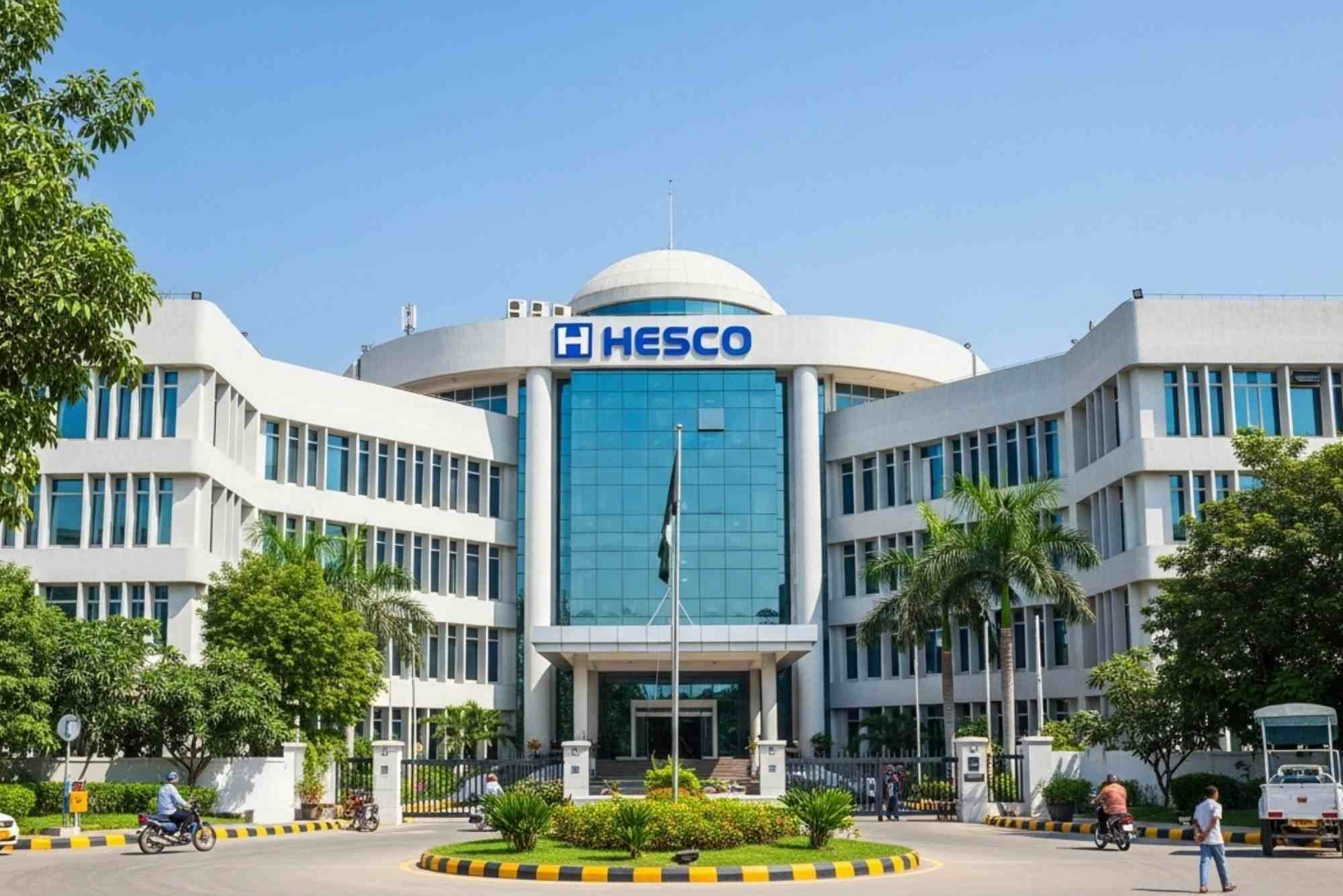
At the same time, this keyword sits in an unusual place on BijliPK because the site’s HESCO archive is focused on Hyderabad Electric Supply Company content, including billing, complaint, and service guides such as HESCO Online Bill Check, HESCO Online Complaint, and HESCO Hyd. That existing category structure is important because it shows this keyword already has a home inside the site’s content map, even if the underlying search intent is broader and more industrial than utility billing.
Why People Search for “HESCO Bags”
Search behavior around this keyword usually falls into a few patterns. Some users are looking for the product itself and want to know what it is. Others are searching for suppliers, manufacturers, installation services, dimensions, or pricing. Some are looking for flood-control barriers after seeing them mentioned in security or disaster-response discussions. Others search the term after seeing it used in Pakistan-based engineering, defense, or construction contexts. Public web results show exactly this kind of use, with pages describing hesco bags as solutions for military defense, site protection, and flood control.

Then there is the local SEO angle. On BijliPK, the term also appears because the site is building topic clusters around electricity companies such as HESCO, GEPCO, FESCO, PESCO, and others. In that environment, a keyword like HESCO Bags may attract visitors who are exploring the site’s HESCO archive or who typed a short HESCO-related phrase and landed on category content. That makes this keyword more useful than it first appears, because it can support both search traffic and internal topical relevance if handled carefully. The HESCO archive on BijliPK already includes HESCO Electricity Bill, HESCO Tenders PPRA, HESCO Bags, MIS HESCO, Wapda Bill HESCO, HESCO Bill Calculation, HESCO MIS, HESCO Hyd, and related pages.
Common Uses of HESCO Bags
The strongest product-oriented search intent behind this term revolves around use cases. HESCO-type bags or barrier systems are used where quick containment and physical protection matter. Supplier and product pages repeatedly mention military zones, checkpoints, flood control, perimeter security, site shielding, and emergency response environments. They are especially useful where soil or sand is readily available, because local fill material can transform the empty units into heavy, functional barriers quickly.
Because the barrier relies on mass and form rather than sophisticated mechanics, its usefulness spans multiple sectors. Defense and security teams use them for protection. Construction and industrial sites use them for temporary walls and containment. Disaster-response operations use them for flood mitigation. This multi-sector relevance is one reason the term continues to appear in both engineering and commercial searches. It is not a niche curiosity. It is a practical, field-tested solution concept reflected across multiple supplier descriptions.
Why the Material Design Matters?
The design logic behind HESCO bags is simple but effective. A wire mesh frame provides shape and structural support, while geotextile lining holds the fill material in place. This combination allows rapid setup and surprisingly strong performance once filled. The use of geotextile is particularly important because it prevents loose material from spilling while still making deployment much easier than building a fixed wall from scratch. Supplier descriptions consistently identify galvanized or reinforced mesh plus geotextile lining as the core construction method.
From an engineering perspective, the appeal is not elegance but speed, modularity, and practical effectiveness. A system like this can be expanded section by section, adjusted based on terrain, and installed in environments where permanent construction would be too slow, too expensive, or too inflexible. That is exactly why public-facing product pages emphasize adaptability as much as strength.
HESCO Bags and Flood Protection
One of the clearest real-world uses for HESCO bags is flood control. When flood risk rises, the ability to create a temporary but robust barrier quickly becomes extremely valuable. Product pages and suppliers regularly mention flood prevention and water-overflow management as one of the core applications of hesco barriers.
This matters because flood protection often demands speed more than perfection. In those conditions, a barrier that can be transported, unfolded, and filled on-site offers an obvious operational advantage. That same logic explains why public safety, emergency response, and infrastructure protection teams continue using such systems in situations where conventional wall-building would be too slow to matter.
For content strategy, this also gives the keyword more depth. A page targeting “HESCO Bags” can legitimately cover engineering, disaster readiness, infrastructure resilience, and site security without sounding repetitive. That creates a more useful article and a much better SEO asset than a page that only repeats the phrase without context.
HESCO Bags in Security and Military Contexts
Another major reason this keyword gets searched is security use. Supplier and manufacturer pages explicitly connect HESCO barriers with military bases, border points, checkpoints, and defensive installations. The core appeal in those settings is fast deployment of thick, fillable protective structures that can help reduce vulnerability around exposed positions.
Even outside military use, the broader security application is easy to understand. Any location needing temporary but substantial perimeter reinforcement can benefit from a modular barrier system. Construction compounds, industrial yards, logistics zones, or temporary event-security sites may all have reasons to consider this kind of solution. That is why commercial suppliers in Pakistan also market hesco bags locally rather than treating them as a purely defense-only product.
How This Keyword Fits BijliPK?
At first glance, an article about HESCO bags might seem unusual on a platform known for electricity bill checking. But the fit becomes clearer when you look at how BijliPK structures topic clusters. The site has category-based content around electricity distribution companies, and the HESCO archive already contains multiple HESCO-focused posts beyond simple duplicate-bill pages. That archive includes service pages and broader informational posts such as HESCO Hyderabad services, HESCO complaint support, and HESCO duplicate bill checking.
In SEO terms, that means the page should not try to pretend the keyword is only about electricity. It should instead acknowledge the product meaning and use the article to strengthen the HESCO topical cluster. That is the smarter move. It improves relevance, supports existing category architecture, and gives users a better answer than a thin placeholder page would.
This is also why internal linking matters here. A visitor who enters through this keyword might next want to learn what HESCO is in the electricity context, how to access a duplicate bill, or how to file a complaint. That makes links to the HESCO category archive, HESCO Hyd, and HESCO Online Bill Check natural rather than forced.
Search Intent: Product Query or Brand/Utility Query?
This keyword is a good example of why SEO content should be built around intent, not just literal matching. A user typing “HESCO Bags” may want one of three things: a definition, a supplier or product page, or context around the term. The search engine results strongly support the product-definition and supplier angle, while BijliPK adds a site-specific brand-cluster angle through its HESCO archive.
A weak article would choose one interpretation blindly and ignore the others. A better article does what this page is doing: it explains the dominant product meaning, shows how the keyword appears in existing BijliPK content, and connects users to the site’s real HESCO resources where relevant. That kind of layered response gives the page a better chance of satisfying mixed search intent.
How to Evaluate Information Around HESCO Bags?
Because much of the visible web content around HESCO bags comes from supplier pages, readers should evaluate information carefully. Suppliers are useful for understanding materials, applications, and market use, but they are still commercial pages. That means content can be helpful and promotional at the same time. In the current search results, supplier pages consistently describe hesco bags as wire-mesh-and-geotextile containment barriers used in defense, construction, and flood-control settings, which creates a reasonable pattern of agreement across sources.
For BijliPK, that pattern is enough to support an informational article, but the page should still avoid exaggerated claims about unmatched strength, universal suitability, or any one-size-fits-all performance promise. Good SEO content wins by being useful and grounded, not by sounding like a brochure.
Why This Keyword Has SEO Value?
“HESCO Bags” has value because it can attract informational traffic from users who do not yet know exactly what the term means. It also has potential commercial relevance, because some searchers may be close to a buying or sourcing decision. On top of that, it strengthens BijliPK’s HESCO topic cluster because the term is already live in the site’s HESCO category. The archive itself confirms the keyword’s place within the site’s structure.
That combination makes the keyword more useful than a purely transactional term with no informational depth. A strong article can rank not only because it includes the phrase, but because it answers surrounding questions: what the bags are, where they are used, why they matter, and how the term relates to HESCO content already available on the site.
What a Strong HESCO Bags Page Should Include?
A high-quality page for this keyword should include a clear definition, explanation of materials, real use cases, clarity on the difference between the product meaning and the HESCO electricity-company context, and natural internal links to the site’s real HESCO pages. It should also avoid overstuffing the keyword or turning the page into a random shopping list. Since BijliPK already has supporting pages such as HESCO complaint support, HESCO Hyderabad services, and HESCO online bill check, the smarter approach is to use this article as an entry point into the wider HESCO section.
- Explain that HESCO bags usually refer to fillable wire-mesh and geotextile barriers.
- Cover the main use cases: flood control, perimeter security, construction, and defense.
- Acknowledge that BijliPK also uses HESCO as part of its electricity-company category structure.
- Link naturally to real HESCO service pages already published on BijliPK.
- Avoid making the page look like a low-value filler post with no practical explanation.
Final Thoughts
HESCO Bags is not a throwaway keyword. It sits at the intersection of product intent, engineering use, and site-specific topical relevance. Public search results clearly show that the phrase is widely used for modular containment barriers built from mesh and geotextile fabric for security, construction, and flood-control work. At the same time, BijliPK already has a real HESCO category where this keyword lives beside electricity-related HESCO content.
That makes the right SEO strategy simple: do not force the keyword into an overly narrow electricity-only meaning, and do not leave it as a thin, context-free post. Instead, explain the product meaning properly, make the article genuinely useful, and then connect readers to the wider HESCO resources already available on the site, including HESCO Online Bill Check, HESCO Online Complaint, HESCO Hyd, HESCO Hyderabad, and the BijliPK homepage.
Related Reading: HESCO Tenders PPRA – Complete Guide to Finding, Applying, and Winning HESCO Contracts — full guide